3 Carat Diamond Ring Price Guide: What to Expect in 2026 (Lab-Grown vs. Natural)
Jun 21, 2026
If a 3-carat diamond ring is on your radar, you already know this is not a casual purchase. It sits in a category where the wrong decision costs tens of thousands of dollars, and the right one lasts a lifetime.
This guide cuts through the noise and gives you the real pricing, the lab-grown vs natural question, which shapes actually look biggest, the clarity mistakes most buyers don't know they're making, and why 2.9 vs 3ct might save you thousands.
How Much Does a 3 Carat Diamond Ring Actually Cost?
This is the question almost everyone types in before anything else, and the honest answer is: it depends heavily on whether you're buying natural or lab-grown.
Here's a straightforward breakdown of what to expect in 2026:
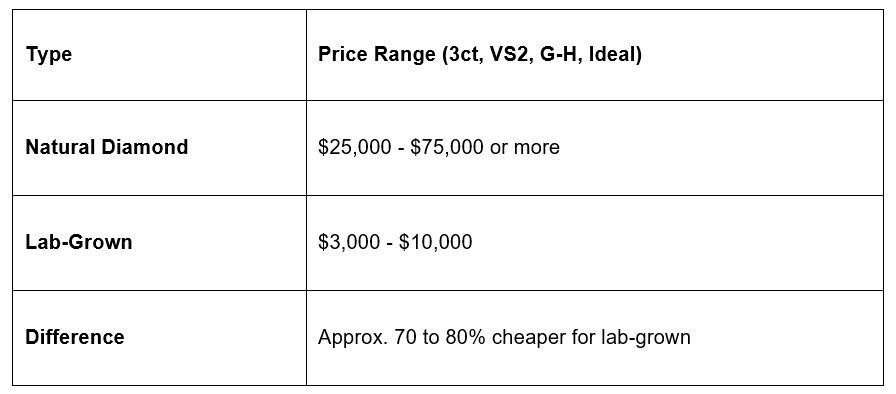
Natural 3 carat diamonds command a premium because they are genuinely rare.
Lab-grown stones on the other hand are chemically, physically, and optically identical to natural diamonds, the only difference is where they came from.
Lab-Grown vs Natural: Which Is Actually Better for a 3 Carat Diamond Ring?
Neither choice is objectively wrong, but here's what the decision actually comes down to:
Choose NATURAL if:
● Long-term resale value matters to you
● The rarity and origin story are part of what the ring means
● You're buying for a partner who places weight on "real" diamonds
● You want something certified by GIA with generational staying power
Choose LAB-GROWN if:
● You want a significantly larger or higher-quality stone for the same budget
● The origin of the diamond is less important than the look and the relationship
● You plan to keep the ring and not resell it
● You want ethical, environmentally sustainable sourcing
One important note: At 3 carats, inclusions are more visible than on smaller stones. This matters more with lab-grown, where buyers sometimes stretch into higher carat weights. So, clarity should not be the first cut you make.
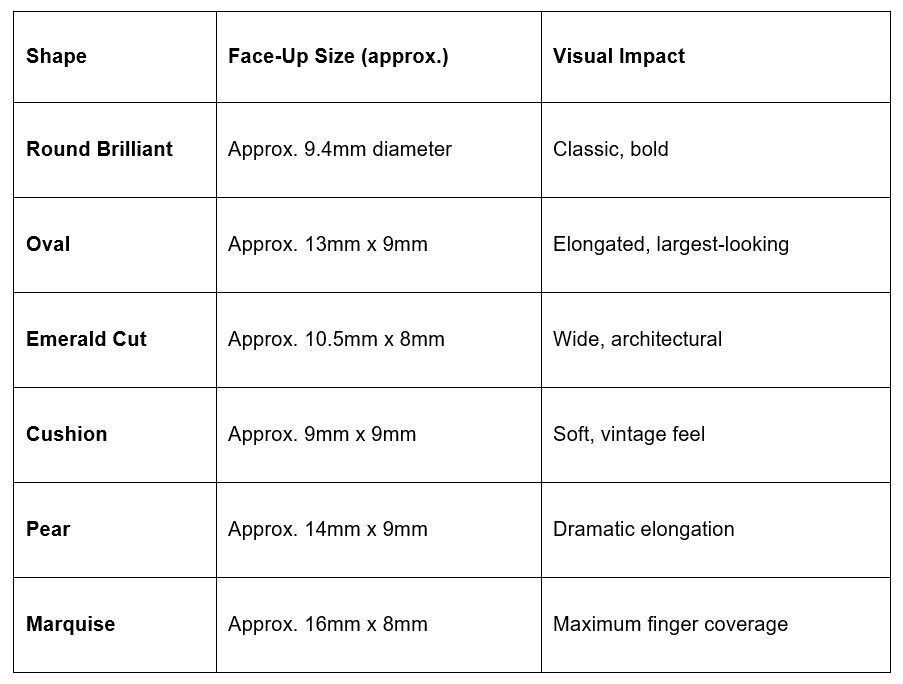
What Does a 3 Carat Diamond Ring Actually Look Like on a Finger?
Size on paper and size on a hand are two different things. The cut shape is the biggest variable determining face-up size.
What Clarity Grade Do You Actually Need for an Eye-Clean 3 Carat Diamond?
At 3 carats, inclusions that would be invisible in a smaller stone become visible, sometimes even to the naked eye.
This is where most buyers make expensive mistakes in both directions: overpaying for flawless grades, or undershooting and ending up with something noticeably included.
The sweet spot for an eye-clean 3 carat diamond:
● Round Brilliant: VS2 is usually eye-clean. SI1 is possible but needs careful inspection stone by stone.
● Oval & Pear: Aim for VS1 or higher, their facet structure can show inclusions more clearly.
● Emerald Cut: VS1 minimum. The step-cut facets act like a window straight into the stone.
● Cushion: VS2 is typically fine due to the brilliant-cut faceting that hides inclusions well.
Note: Always request GIA, IGI, or AGS certification. At this price point, unverified stones are a risk not worth taking.
Is Buying a 2.9 Carat Diamond Instead of 3ct a Smart Move?
Yes and most jewelers won't tell you this unprompted.
Diamond pricing jumps significantly. A 2.9 carat diamond is optically indistinguishable from 3 carat and can save you 15 to 20% on the purchase price.
It looks identical. It weighs nearly the same. It just avoids the pricing threshold.
If budget is a factor and you're between a 2.9ct with excellent cut and a 3ct with a slightly compromised cut, then take the 2.9ct every time.
Cut quality affects brilliance more than carat weight does.
What Settings and Style Trends Work Best for a 3 Carat Stone?
● Solitaire (4 or 6 prong): The classic. Keeps all the focus on the diamond. 6-prong offers more security for a stone this size.
● Hidden Halo: Adds visual diameter without detracting from the center stone. Works particularly well with oval and round shapes.
● Bezel Set: Contemporary, protective, and sleek. Slightly reduces the visible face-up area but adds a modern edge.
● Toi et Moi: Two stones in one setting. Growing in popularity, especially as an alternative to a single statement stone.
● Avoid very thin pavé bands with stones this heavy, they can bend over time. Go for a sturdier band profile of at least 2mm.
Does a 3 Carat Diamond Ring Hold Its Value?
Natural diamonds retain value better than lab-grown, though neither is a liquid investment. The resale market for natural diamonds hovers around 20 to 50% of retail depending on quality and market timing.
Lab-grown diamonds have seen significant price decreases over the past few years as production has scaled — resale is considerably lower.
If you're buying for sentimental reasons, this should be a minor consideration.
If you view jewelry as an investment, naturally with GIA certification is the only route that makes sense.
However, lab-grown diamonds offer unique value:
They're chemically identical, ethically sourced, and allow you to maximize appearance within your budget.
Key Takeaway: Make the Right Choice
Choosing a 3-carat diamond comes down to balancing budget, cut, and clarity. Lab-grown stones give you a bigger look for less, while natural diamonds hold value better over time.
Focus on certified diamonds, smart sizing, and a strong setting to get the best long-term fit.
Great! Now you’ve done the research, it’s time to choose a ring that truly means something.
Explore Darry Ring’s engagement collection, where every ring is made for one person, for life.
Enjoy free resizing, lifetime warranty, and diamond upgrades as your story grows.
Keep Yourself Lovingly Informed
Join Our Mailing List for Exclusive Updates